Two Guards for Cervical Health: HPV Tracks the 'Enemy', Methylation Detects 'Internal Change' — CISCER PAX1/JAM3 Sees Cervical Cancer Risks Earlier!
Cervical health screening requires two important checkpoints
Key points: HPV testing and PAX1/JAM3 methylation testing answer two different questions — the former asks "is high-risk virus present?", the latter asks "have cells already undergone cancer-related molecular changes?" Used together they offset each other’s blind spots: methylation reads lesion-progression risk from within the cell, and provides critical triage information when HPV results and lesion risk disagree.
What is the difference between HPV testing and methylation testing?
HPV testing looks for the "external cause" — infection with high-risk HPV; the PAX1/JAM3 methylation test looks for the "internal change" — whether key genes in cervical cells have been highly methylated (i.e., whether cells are progressing toward malignancy). About 90% of HPV infections clear within 1–2 years, so HPV positivity does not mean disease; methylation status, by contrast, correlates strongly with high-grade lesions (CIN2/3) and more directly signals real cellular transformation.
HPV testing vs methylation testing at a glance
| Dimension | HPV testing | PAX1/JAM3 methylation testing |
|---|---|---|
| What it examines | Viral DNA/RNA (exogenous infection) | Host-cell gene methylation (endogenous change) |
| Question answered | Is high-risk HPV present? | Have cells undergone cancer-related molecular change? |
| Positive meaning | High-risk infection present (~90% self-clear) | Molecular signal highly associated with CIN2/3 progression |
| Main limitation | Cannot separate transient infection from progressing lesions | Provides no viral typing information |
| Typical use | Primary screening | HPV-positive triage, progression risk assessment, post-treatment follow-up |
| Sampling | Cervical exfoliated cells | Cervical exfoliated cells (non-invasive, self-sampling compatible) |
Combined use: Reading HPV typing, methylation results, age, and cytology together enables more precise triage decisions.
: HPV testing is responsible for detecting "external invasion," while the CISCER® PAX1/JAM3 methylation test focuses on identifying the cell's own "internal transformation." The two complement each other, but methylation testing can more directly reveal the "internal malignant transformation signals" as cells progress toward lesions — and can sometimes even gain early insight into cervical cancer before other methods!
Checkpoint 1: HPV Testing — Detecting "Enemy Traces"
- What Does It Test For?
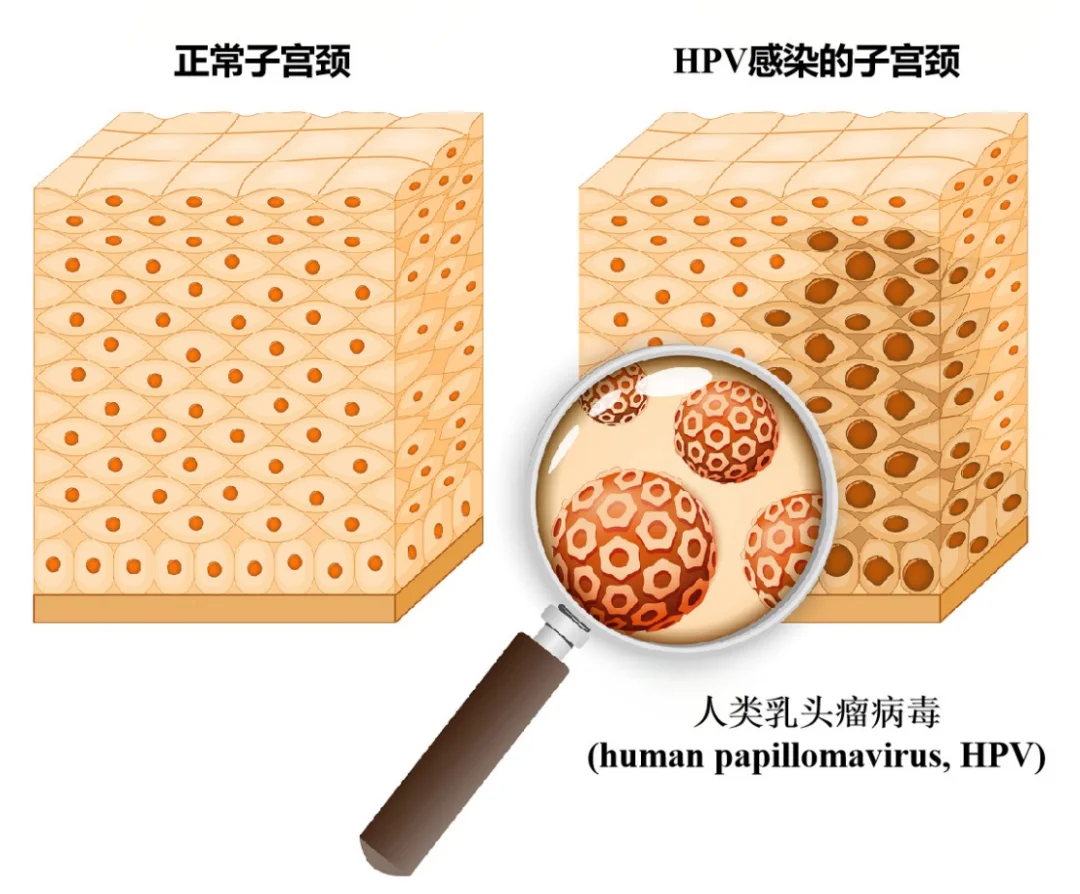
HPV testing specifically looks for traces of cancer-causing "high-risk" human papillomavirus (HPV) types (viral DNA or RNA). Simply put, it checks whether dangerous viruses (especially the most dangerous types) have entered your cervix.
- What Do the Results Mean?
(1) Positive (+): High-risk virus detected! This is the main "culprit" of cervical cancer. But remember: the vast majority of people (about 90%) have strong immune "defenders" that can clear the virus within 1–2 years.
(2) Negative (-): Good news! There's likely no high-risk enemy present, significantly reducing risk. However, even the wisest can occasionally miss something;
No test is "all-seeing." HPV testing also has "escapees" (false negatives)! For example: the enemy is present in very small numbers (extremely low viral load), the lesion was not "caught" during biopsy sampling, or the patient is infected with a high-risk type not covered by current testing (HPV generally has over 200 types, with testing focusing on 14 types). There is no 100% perfectly accurate testing technology in the world.
Checkpoint 2: CISCER® PAX1/JAM3 Methylation Testing — Detecting "Internal Transformation"
- What Does It Test For?
Rather than looking for the virus, it directly probes inside our cervical cells! The CISCER® PAX1/JAM3 methylation test specifically checks whether key "safety guardian" genes (PAX1, JAM3) within cells have been "sealed" (hypermethylated). These genes are normally responsible for keeping cells from growing uncontrollably. Once "sealed" (hypermethylated), cells may "lose control" and embark on a path of rapid high-grade lesion progression.
- Why Is It Important?
The CISCER® methylation test provides dual safety signals from PAX1 and JAM3 — essentially directly monitoring "danger signals" emitted from within cells! It can earlier and more directly indicate whether cells have undergone substantive molecular changes closely associated with the progression of precancerous lesions (especially high-grade CIN2/3). Scrutinizing the subtle to understand the significant!
- What Do the Results Mean?
- Positive (+): This suggests that serious "mutiny" or loss of control may have occurred inside cells (hypermethylation), highly correlated with high-grade precancerous lesions (CIN2/3) and even risk of cancer progression. This is a strong signal reflecting the actual progression status of the disease!
- Negative (-): The cell's interior is currently relatively "stable." Key "safety guardian" genes are still functioning, and the risk of rapid deterioration in the short term is very low — an important "reassurance."
Two checkpoints, different result combinations call for different management strategies!
- Scenario 1: HPV Positive (+) + Methylation Negative (-)
Next steps: Follow physician's advice. If positive for high-risk HPV 16/18, colposcopy is still required; for other high-risk types with normal cervical cytology (TCT), HPV + methylation testing can be repeated in 6 months.
- Scenario 2: HPV Negative (-) + Methylation Positive (+)
Persistent high-risk HPV infection is typically the "mastermind" causing cellular "internal transformation" (methylation positivity). Therefore, HPV-negative but methylation-positive, while uncommon, is like "alarm lights flashing wildly" — requiring heightened vigilance!
Possible causes:
-
- The virus is hiding too deep: Lesional cells are hiding in the endocervical canal or only a small amount of HPV infection was sampled (low viral load), cleverly evading HPV detection (false negative). But the infecting virus is sufficient to "fan the flames," triggering malignant transformation within cells! What's next?
-
- Before colposcopy, the non-invasive CISCER® methylation test has already been performed. When positive, it alerts the colposcopist to pay special attention to lesions hiding deep within, to catch the concealed lesion.
-
- No time to lose! Colposcopy + biopsy (histopathological examination) must be performed immediately! This is the "gold standard" for diagnosis. Magnified examination of the cervical surface + tissue sampling is necessary for accurate diagnosis and risk exclusion.
-
- The longer you wait, the higher the risk. Regardless of whether you've been vaccinated against HPV, regardless of whether you have symptoms, regardless of whether your previous TCT results were normal — you must get tested ASAP!
Why the urgency?
- An HPV-negative result may seem like "all is peaceful," but a positive methylation result is like discovering "the inner courtyard is already on fire"!
- Methylation testing is like a guiding light, directing colposcopy + biopsy (the "demon-revealing mirror") in the right direction. Any potentially hidden serious problem must be uncovered — nipping it in the bud, without delay!
Summary: CISCER® Methylation — Insight into "Internal Transformation" Is Key!

- HPV positive ≠ cancer! The vast majority of infections are self-limiting, but regular follow-up per physician's advice is needed.
- HPV negative ≠ absolutely safe! A small chance of "escapees" cannot be ignored.
- CISCER® PAX1/JAM3 methylation positive — sounding the "internal transformation" alarm! It directly reveals dangerous trends within cells and is the "critical signal light" for assessing lesion progression risk! Especially when contradictory to HPV results (HPV-/Methy+), it's like "dark clouds gathering before the storm" — requiring the highest attention, with immediate colposcopy + biopsy or intensive follow-up!
- Methylation negative — an important "reassurance," but don't let your guard down:
- HPV 16/18-positive women still need colposcopy;
- Other high-risk types: regular follow-up per physician's advice.
- Physicians can more effectively assess short-term risk by combining all results.
Most important: Trust the professionals, guard both checkpoints together! HPV testing detects "enemy traces," CISCER® PAX1/JAM3 and other methylation tests detect "internal transformation" — both swords combined enable comprehensive insight! Your physician will integrate all information (HPV genotyping, methylation results, age, symptoms, TCT, etc.) to develop the best screening plan.
Remember the ancient saying: "Prevention before it happens is the best strategy." Follow your physician's guidance, comprehensively assess, and the health gateway can withstand viral invasion.
Regular scientific cervical screening, including HPV and CISCER® PAX1/JAM3 and other methylation tests, is like building "dual insurance" for cervical health. Know yourself and your enemy, and you will prevail — eliminating risk in its bud!
Frequently Asked Questions
HPV-positive but methylation-negative — do I need colposcopy right away?
For HPV16/18 positivity, guidelines still recommend colposcopy. For other high-risk types with normal cytology, repeat HPV plus methylation testing in 6 months is common practice per medical advice. A negative methylation result indicates low risk of rapid near-term progression and serves as an important triage signal.
HPV-negative but methylation-positive — is that serious?
This combination is uncommon and warrants prompt attention: it may reflect very low viral load or a lesion hidden deep in the canal that HPV testing missed, while cells have already undergone real molecular change. Colposcopy, with biopsy if needed, is typically advised without delay.
I received the HPV vaccine — do I still need these tests?
Yes. The vaccine prevents new infection with specific types; it does not treat existing infections or lesions and does not cover all high-risk types. Regular screening remains necessary regardless of vaccination.

Beijing Origin CISPOLY Biotechnology Co., Ltd. is a technology-driven enterprise committed to health innovation. As a pioneer in the field of early gynecologic oncology diagnosis, CISPOLY has developed early-detection products for cervical cancer, endometrial cancer, and ovarian cancer using proprietary technologies and patent-protected biomarkers, filling a critical gap in the field.
As women pay increasing attention to their own health, the women's health market holds great potential. Beyond the early screening and diagnosis product pipeline for gynecologic oncology, CISPOLY will continue to build additional women's health product lines, establishing itself as a technology-innovation-leading enterprise in the women's health market.