Postmenopausal 'Periods'? Don't Ignore This Common Symptom! New Testing Technology Leaves No Hiding Place for Endometrial Cancer
Recently, a 62-year-old woman became alarmed — she had been postmenopausal for 5 years, and last week suddenly noticed blood spots on her underwear. She rushed to the hospital, where the physician recommended a "dilation and curettage" (D&C) examination. But recalling the painful and potentially miss-prone nature of such examinations, she hesitated about whether to proceed, thinking it might be a recurrence of her old uterine problem. She had been followed up for years without issues, and although symptoms gradually disappeared after menopause, she thought maybe she was just overtired and would be fine after some rest. In fact, many women share similar concerns — after experiencing D&C, they hesitate, thinking, "My previous results weren't endometrial cancer, so why would it be now? It's just the old problem again, nothing to worry about."
Endometrial cancer, as one of the three major cancers of the female reproductive system in China, has an incidence rate that rises every year, with an increasing preference for younger women. Data shows that China sees over 200,000 new cases annually, and over 70% are early-stage patients — if detected early, treatment essentially does not affect quality of life. The problem is: physicians always say that ultrasound always shows problems with uterine cavity conditions, but how do you distinguish endometrial cancer from general benign uterine cavity diseases? Based on online and professional physician recommendations, the most commonly used method now is "D&C examination." After finally taking the first step to undergo curettage — "Pain! Pain! Pain!" And the missed diagnosis rate is as high as 20%–30%! What is this situation??? Continue with follow-up, follow-up, and when ultrasound shows problems, repeat the curettage.
Why Does "Curettage" Also Miss Diagnoses? The Old Method Has Three "Fatal Flaws"
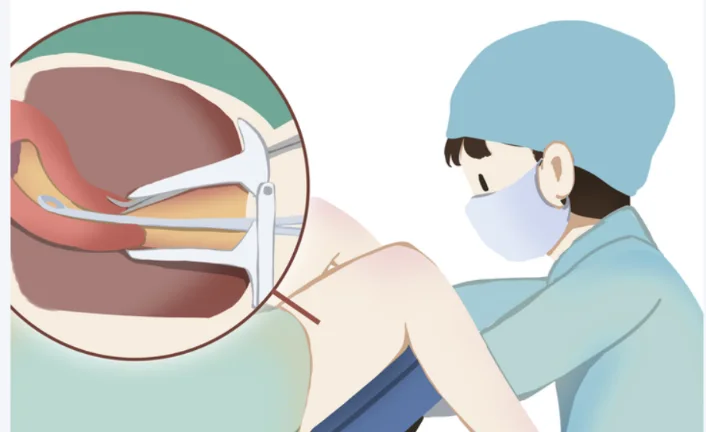
D&C examination, in plain terms, involves inserting an instrument through the vagina, into the cervical os and endocervical canal, and directly into the uterus to scrape the endometrium. The physician cannot see inside and relies on experience to scrape up, down, left, and right. The tissue is then sent for laboratory examination to check for cancer cells. It "used to be" considered the "gold standard." Although hysteroscopy now exists, it is not yet widely available in hospitals and requires anesthesia and hospitalization. The most commonly used D&C has significant practical issues:
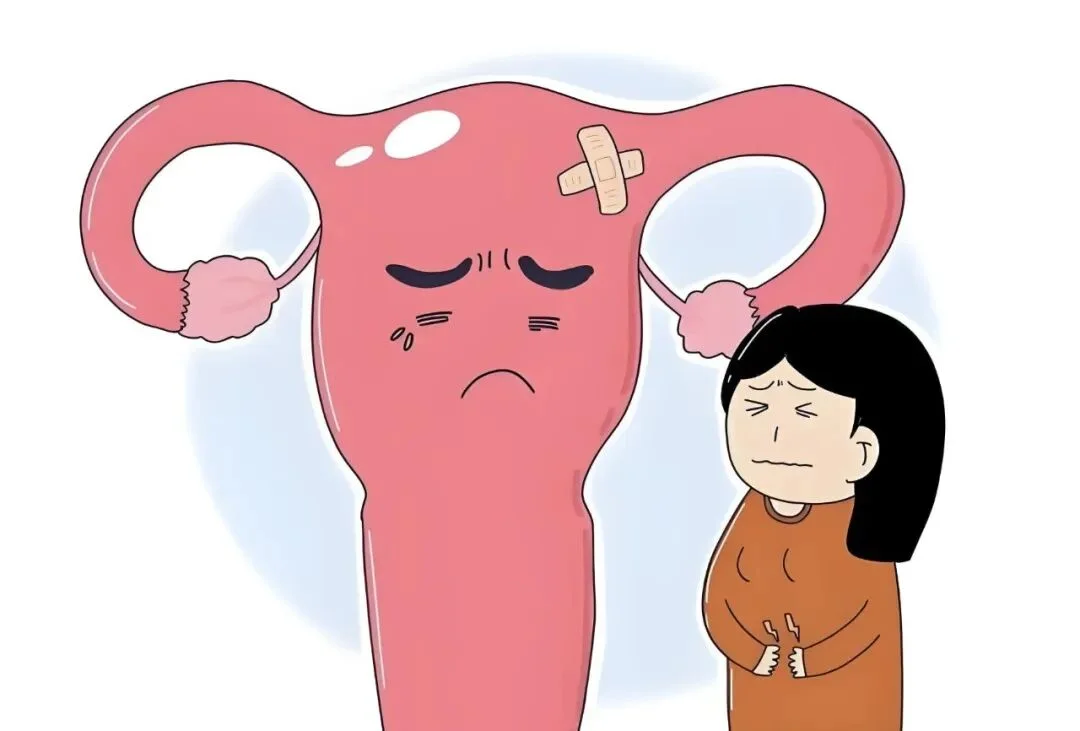
First, the lesion is too "elusive." Endometrial cancer lesions are often very small, possibly occupying only 5% or less of the endometrial surface. During scraping, the physician relies entirely on experience — like searching for a needle in the ocean — making it easy to miss tiny lesions.
Second, the trouble of a "thin" endometrium. Postmenopausal women naturally have thin endometrium (normally only 1–4 mm), and during scraping, it may not be possible to obtain sufficient tissue, resulting in "false negatives" — cancer is present but not detected.
Third, patients are "afraid of pain" and avoid examination. D&C is, after all, an invasive procedure. The process of dilating the cervix and scraping the endometrium causes many to break out in a cold sweat. Some women refuse repeat examinations due to fear of pain, delaying diagnosis.
Even more distressing is that many young women today wish to preserve their intact endometrium (e.g., wanting to have a second child). Learning online that D&C may cause complications including infection, uterine damage, intrauterine adhesions, menstrual abnormalities, and infertility, if the curettage results are inaccurate, the endometrium may be damaged for nothing! Caught in hesitation, they may miss the optimal treatment window for cancer.
New Technology Is Here! Non-invasive Testing — Test Genes First, Eliminate the Hesitation Around "Curettage" — Precise Detection, Easier and More Accurate Cancer Screening
Recently, a new methylation testing technology called "CISENDO®" has gained attention — it doesn't require scraping the endometrium; it only needs a sample of cervical secretions to assess endometrial cancer risk! How does it work?
As it turns out, cancer cells have a "tell-tale trail": DNA methylation. Simply put, our cells have a set of "gene switches." In normal cells, the switches are "on," allowing tumor suppressor genes to function properly. But cancer cells secretly "lock" these switches (abnormal methylation), causing tumor suppressor genes to stop working, and cancer cells begin to grow uncontrollably.
The CISENDO® test is specifically designed to detect the "critical locks" of endometrial cancer. By analyzing the methylation levels of two key locks (key genes — CDO1 and CELF4) in cervical exfoliated cells, it can determine whether the endometrium has cancer risk. This method is like routinely checking whether the safe has been tampered with, whether the jewelry is still there, and whether the safe lock is still secured as before. A woman's uterine health is like jewelry — ultrasound will often reveal issues, but most ultrasound-detected problems are not life-threatening. For women with clinical symptoms of endometrial cancer (abnormal bleeding) or those with prior ultrasound abnormalities, checking whether the critical locks of endometrial cancer are secure is simple, convenient, and reassuring.
Compared to Traditional Curettage, the Advantages Are Clear:
Virtually painless! No cervical dilation needed — just a swab to collect secretions at the cervical os, similar to a routine gynecologic examination, with almost no sensation.
Fewer missed diagnoses! Clinical research shows it can detect 89.7% of early endometrial cancer (curettage only detects 65%–75%). Even when the endometrium is as thin as 2 mm, the missed diagnosis rate drops below 5%.
More accurate results! It speaks with numbers, unlike curettage which depends on the physician's visual judgment. The false positive rate (false alarm) is only 2%, much lower than curettage.
It can also provide early warning! Not only can it detect already-cancerous cells, but it can also identify "precancerous lesions" (high-grade endometrial hyperplasia) in advance — essentially pressing "pause" on cancer.
Recommended as the "Golden Partner" for curettage, especially for these situations:
-
Sudden postmenopausal bleeding or vaginal discharge;
-
Prolonged or excessively heavy menstrual periods;
-
Ultrasound suggesting endometrial thickening or a mass;
-
Inconclusive curettage results requiring confirmation;
-
Detection of precancerous lesions requiring regular follow-up.
Early Detection Can Save Lives! Watch for These Signs
Early symptoms of endometrial cancer are actually quite noticeable: postmenopausal bleeding (even a single drop), prolonged menstruation (over 7 days), vaginal discharge (resembling rice water), lower abdominal dull pain... If you experience any of these, don't delay! Now with non-invasive testing like CISENDO®, you can do a preliminary screening first before deciding whether to undergo curettage.
"In the past, patients were afraid of missed diagnoses and avoided screening. Now with a new weapon, patients are more willing to comply, and we can catch cancer earlier," reflected a physician from Peking Union Medical College Hospital. "The significance of medical progress is that more women no longer need to worry about 'missed diagnoses,' while also protecting the uterus from damage, enabling them to embrace health earlier."
From "blind scraping" to "molecular detection," from "enduring painful exams" to "easy screening" — the launch of CISENDO® is not just a technological breakthrough, but a health blessing for countless women. Remember: cancer is not terrifying — early detection and early treatment are key!
For women who love themselves and their families — during checkups, when doing cervical Pap smears and HPV testing, remember to also request "CISENDO® testing." Loving yourself more is loving your family more!

Beijing Origin CISPOLY Biotechnology Co., Ltd. is a technology-driven enterprise committed to health innovation. As a pioneer in the field of early gynecologic oncology diagnosis, CISPOLY has developed early-detection products for cervical cancer, endometrial cancer, and ovarian cancer using proprietary technologies and patent-protected biomarkers, filling a critical gap in the field.
As women pay increasing attention to their own health, the women's health market holds great potential. Beyond the early screening and diagnosis product pipeline for gynecologic oncology, CISPOLY will continue to build additional women's health product lines, establishing itself as a technology-innovation-leading enterprise in the women's health market.