PAX1/JAM3 Methylation Testing Presents a New Chinese Self-Sampling Cervical Cancer Screening Approach at EUROGIN
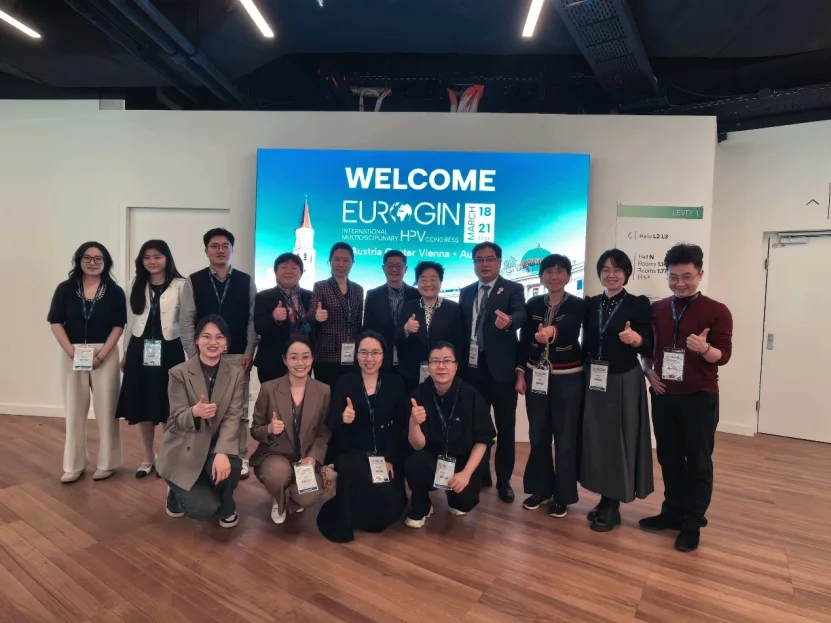
Recently, at the EUROGIN (European Research Organization on Genital Infections and Neoplasia) international congress held in Vienna, Austria, Dr. Liu Yuli, distinguished specialist at Beijing Tsinghua Changgung Hospital, delivered a groundbreaking research presentation titled "Diagnostic Performance Evaluation of Self-Sampled PAX1/JAM3 Methylation Detection." This study demonstrated for the first time that PAX1/JAM3 methylation detection based on self-sampling technology exhibits outstanding diagnostic performance in cervical cancer screening, providing an innovative solution to global challenges such as uneven medical resource distribution and low screening coverage.

I. Background: Breaking Through Limitations of Traditional Screening Models
The traditional "three-step" cervical cancer screening model (cytology/HPV primary screening → colposcopy → pathological diagnosis) faces multiple challenges in real-world implementation: uneven medical resource distribution, high dependence on specialized equipment and personnel, low patient compliance with multiple visits, and subjective variability in colposcopy results. Dr. Liu noted: self-sampling combined with methylation detection can effectively overcome geographical barriers, utilize objective molecular biomarkers to substantially reduce unnecessary colposcopy referrals, and establish a patient-centered efficient follow-up process.

II. Key Findings: Outstanding Performance of Self-Sampled Methylation Detection
This study used a prospective cohort design, divided into a concordance study (self-sampled and clinician-sampled specimens) and a diagnostic performance study cohort, performing PAX1/JAM3 methylation detection in parallel comparison with hrHPV testing, cytology, and other traditional methods.
Results showed that the complementary design of PAX1/JAM3 combined methylation detection ensured a balance between sensitivity and specificity, achieving a diagnostic sensitivity of 78% and specificity of 88% for CIN2+ lesions—significantly superior to traditional screening methods. Particularly noteworthy, the results between self-sampling and clinician sampling showed high concordance, breaking the traditional assumption that "self-sampling has lower accuracy."
Subgroup analyses revealed that methylation detection performed stably across different populations:
-
Premenopausal women: High specificity effectively avoids overtreatment in reproductive-age women, protecting fertility;
-
Postmenopausal women: High sensitivity can detect occult lesions masked by cervical atrophy;
-
Type TZ3 transformation zone: Effectively identifies high-grade lesions in 52.6% of cases where colposcopic examination is difficult.

III. Clinical Significance and Promotion Value
This technology is particularly suitable for promotion in remote areas of China and regions with insufficient medical resources, potentially dramatically improving screening coverage while ensuring consistent detection quality. Self-sampled methylation detection provides technological support for achieving the WHO "2030 Elimination of Cervical Cancer" goal, and is poised to solve the "last mile" challenge in screening.

Beijing Origin-Poly Co., Ltd. is a technology enterprise driven by innovation and committed to health. As a pioneer in the field of early diagnosis of gynecologic tumors, CISPOLY has developed early detection products for cervical cancer, endometrial cancer, ovarian cancer and other gynecologic malignancies based on proprietary technologies and patent-protected biomarkers, filling gaps in this field.
As women's awareness of their own health continues to grow, the women's health market holds tremendous potential. Beyond the gynecologic tumor early screening and diagnosis product line, CISPOLY will continue to establish additional women's health-related product pipelines, striving to become a technology innovation leader in the women's health market.