Non-Invasive PAX1 and JAM3 Methylation Testing Predicts Pathological 'Upgrading' After Cervical Surgery — A Powerful Stratification Tool for Individualized Surgical Decisions
A retrospective study completed through collaboration between Zhejiang Provincial People's Hospital and Hangzhou Normal University found that: high methylation of PAX1 and JAM3 genes in cervical exfoliated cells was significantly higher in the post-conization pathological upgrade group than in the non-upgrade group.
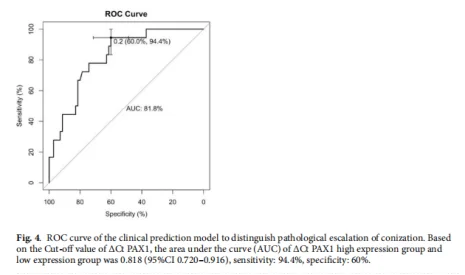
Establishing a non-invasive cervical cancer detection prediction model: Detection of PAX1/JAM3 methylation in cervical exfoliated cells shows good discriminative ability in distinguishing "pathological upgrade" (AUC=0.818), suggesting that methylation detection can serve as pre-conization triage and treatment decision support. It is particularly significant for precise detection and stratified management of young patients wishing to preserve fertility and elderly patients with cervical atrophy.
1. Study Background
Cervical intraepithelial neoplasia (CIN) has three clinical outcomes: "regression – persistence – progression." Conization is used for both definitive diagnosis and treatment, but pre-operative cervical biopsy (colposcopy-directed biopsy, CDB) and post-conization pathology results are often inconsistent (including "pathological upgrade"), which can lead to delayed treatment or overtreatment.
DNA methylation is a key molecular event in tumorigenesis and progression. PAX1 and JAM3 are candidate methylation marker genes, and existing research suggests their potential value in HSIL and cervical cancer stratification.
2. Study Objective
To investigate the impact of PAX1 and JAM3 gene methylation on pathological upgrade after cervical conization.
3. Study Methods
-
Single-center retrospective cohort study, including 549 patients who underwent colposcopy for analysis, to identify independent risk factors for pathological upgrade after cervical conization and establish a prediction model.
-
Statistical analysis methods: Univariate screening, multivariate logistic regression, ROC curves and AUC, Bootstrap calibration and decision curve analysis (DCA) were used to evaluate model performance and clinical net benefit.
4. Study Results
PAX1 or JAM3 methylation "positive" results indicated that the "conization vs. biopsy tissue pathology" upgrade group was significantly higher than the non-upgrade group, with statistical significance (P<0.05).
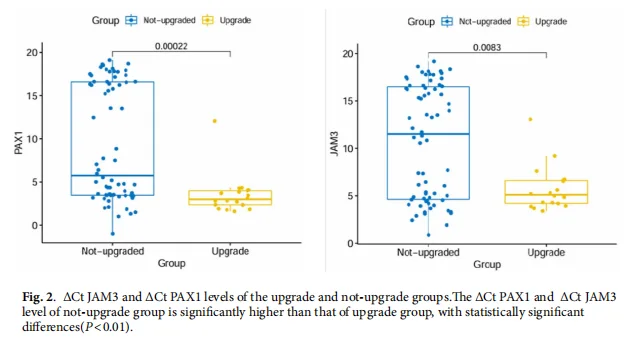
∆Ct PAX1 and endocervical canal (ECC) lesions were independently correlated factors.
Post-conization pathological upgrade prediction model: AUC = 0.818 (95% CI 0.720–0.916) with specificity as high as 94.4%. Therefore, methylation detection is a promising triage biomarker for predicting pathological upgrade before CIN conization.
When using the ∆Ct PAX1 cutoff value of 4.34 determined by the Youden index, it highly suggests pathological upgrade, with the model showing specificity of 94.4% at maximum Youden conditions.
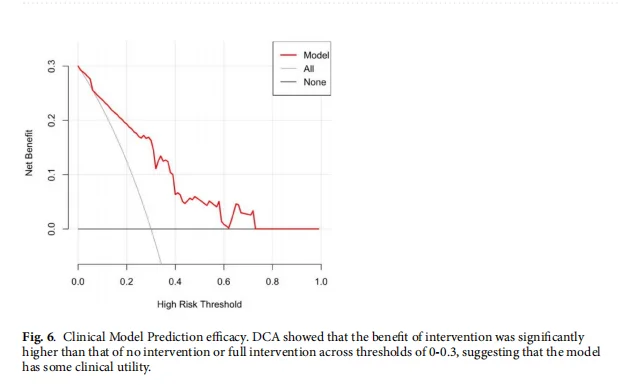
Bootstrap calibration error averaged 0.031, and DCA showed net benefit superior to the "treat-all-or-none" strategy in the 0–0.3 threshold range.
5. Article Summary
The Human PAX1 and JAM3 Gene Methylation Detection Kit (PAX1/JAM3 methylation, NMPA-approved Class III medical device) can serve as a promising pre-operative non-invasive triage management biomarker. When non-invasive testing shows hypermethylation (0<∆Ct<4.3), it indicates significantly elevated risk of post-conization pathological upgrade, and women with Type 3 transformation zones should be particularly vigilant clinically. Conversely, patients with moderate or low methylation (∆Ct ≥ 4.3) have relatively low short-term risk of pathological progression; if patients have fertility intentions, more conservative management, delayed surgery, or minimally invasive treatment can be considered. Combined with endocervical lesion information, this indicator can further improve the predictive value for "actual lesions."
6. Clinical Application Value and Significance
Impact on Reproductive-Age Women
For young women planning to preserve fertility, precisely determining whether conization is truly necessary is of great importance — using non-invasive methylation detection may help avoid unnecessary conization, thereby reducing future pregnancy complication risks.
For Unsatisfactory Colposcopy (Type 3 Transformation Zone)
For women with prior cervical treatment, postmenopausal status, or Type 3 transformation zones — using non-invasive methylation detection can improve the detection rate of occult high-grade lesions, thereby reducing missed diagnosis risk.
Pre-operative Risk Stratification Management
When colposcopy biopsy results show CIN, adding methylation detection can help identify "hidden" higher-grade lesions (underdiagnosed), thereby reducing delayed treatment from missed diagnoses and also reducing excessive invasive treatment for low-risk patients.
Potential Advantages in Resource-Limited Settings
When routine colposcopy/pathology assessment resources are limited or quality varies, molecular methylation detection can serve as an objective, reproducible pre-operative auxiliary tool.
Literature Source
Chen X, Xu H, Zhao L, Jiang H, Shou H. The role of PAX1 and JAM3 methylation in predicting the pathological upgrading of cervical intraepithelial neoplasia before conization. Sci Rep. 2025;15(1):17684. doi:10.1038/s41598-025-01422-3

Beijing Origin CISPOLY Biotechnology Co., Ltd. is a technology enterprise driven by innovative science and focused on health. CISPOLY is a pioneer in the field of early diagnosis of gynecologic tumors. With proprietary technology and patent-protected biomarkers at its core, the company has developed early diagnostic products for cervical cancer, endometrial cancer, ovarian cancer, and other gynecologic tumors, filling a void in this field.
As women pay increasing attention to their own health, the women's health market holds great promise. Beyond its gynecologic tumor early screening and diagnosis product line, CISPOLY will continue to build additional women's health-related product pipelines, striving to become a technology-innovation-driven leader in the women's health market.