New Publication | Beneficial Vaginal Bacteria May Prevent Cervical Lesions by Downregulating Gene Methylation Levels
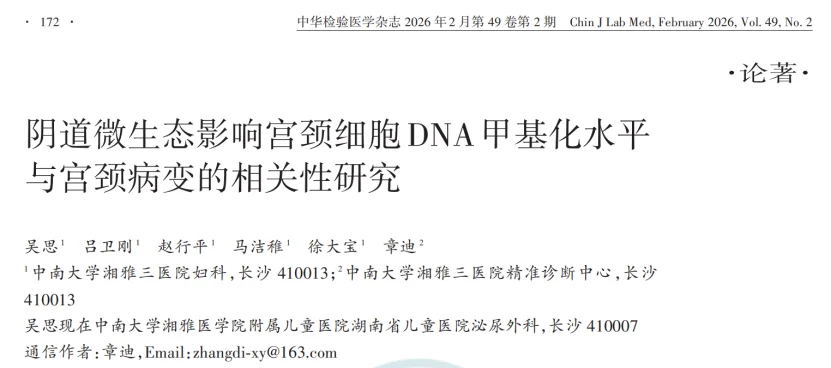
A team from the Department of Gynecology and Precision Diagnostics Center at the Third Xiangya Hospital of Central South University published a study in the Chinese Journal of Laboratory Medicine titled "Correlation Study of Vaginal Microbiota Effects on Cervical Cell DNA Methylation Levels and Cervical Lesions." This study examined for the first time the relationship between vaginal microbiota dysbiosis, PAX1/JAM3 methylation changes, and cervical lesion progression. The findings suggest that Lactobacillus crispatus may indirectly influence the development and progression of cervical lesions by inhibiting hypermethylation of tumor suppressor genes, providing new clues for cervical lesion risk stratification and early prevention.
I. Key Findings
- Cervical lesion progression is accompanied by significant changes in vaginal microbiota
The study found that as cervical lesions worsen, the vaginal microbiota undergoes significant changes, with statistically significant differences in bacterial density, bacterial diversity, Nugent score, pH, dominant bacteria, and leukocyte esterase. The overall trend shows decreased dominant Lactobacillus, increased microbial diversity, elevated pH, and more pronounced inflammatory responses.
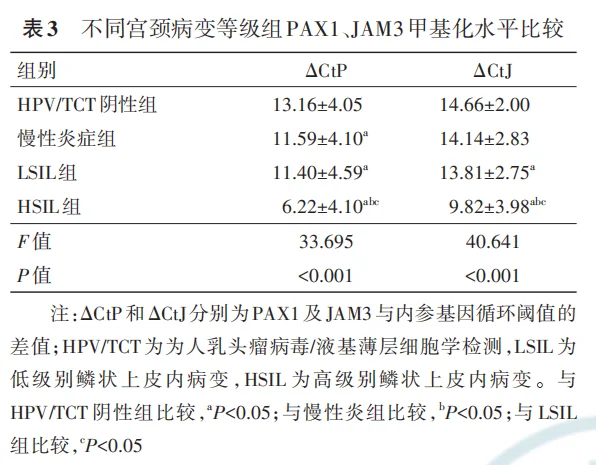
- Multivariate logistic regression showed that PAX1 and JAM3 methylation levels correlate with increasing cervical lesion grade
- Lactobacillus crispatus may be a key protective factor
In multivariate analysis, Lactobacillus crispatus positivity was negatively correlated with increasing cervical lesion grade, suggesting it may have a protective effect.
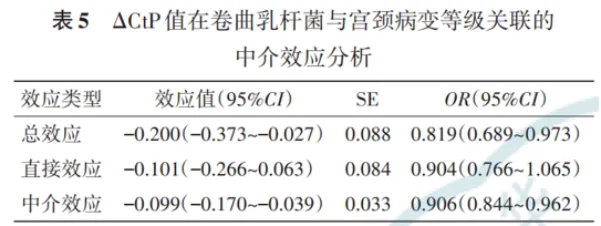
- Vaginal microbiota may influence lesions through the "methylation pathway"
II. Clinical Significance
This study links "vaginal microbiota dysbiosis"—"DNA methylation changes"—"cervical lesion progression." The association between Lactobacillus crispatus and methylation, in particular, provides new mechanistic clues for understanding why certain HR-HPV-infected individuals are more susceptible to persistent infection and lesion progression.
III. Application Prospects
The findings support future exploration of a comprehensive screening strategy of "HPV testing + vaginal microbiota assessment + methylation detection," particularly promising for identifying high-risk individuals with true progression risk. Maintaining vaginal microbiota balance, particularly enriching Lactobacillus crispatus, may also become a strategy for cervical lesion intervention or prevention.
Reference:
Wu S, Lv W, Zhao X, et al. Correlation study of vaginal microbiota effects on cervical cell DNA methylation levels and cervical lesions [J]. Chinese Journal of Laboratory Medicine, 2026, 49(2): 172–180. DOI: 10.3760/cma.j.cn114452-20250807-00449.

Beijing Origin-Poly Co., Ltd. is a technology enterprise driven by innovation and committed to health. As a pioneer in the field of early diagnosis of gynecologic tumors, CISPOLY has developed early detection products for cervical cancer, endometrial cancer, ovarian cancer and other gynecologic malignancies based on proprietary technologies and patent-protected biomarkers, filling gaps in this field.
As women's awareness of their own health continues to grow, the women's health market holds tremendous potential. Beyond the gynecologic tumor early screening and diagnosis product line, CISPOLY will continue to establish additional women's health-related product pipelines, striving to become a technology innovation leader in the women's health market.