ESGO Releases New Position on Cervical Cancer Screening: Methylation Key to Triage, CISPOLY CISCER® Poised for Precision Screening
[Beijing] Recently, the European Society of Gynaecological Oncology (ESGO) and the European Network of Gynaecological Cancer Advocacy Groups (ENGAGe) jointly released the Position Statement on Risk-Based Cervical Cancer Screening, clarifying that global secondary prevention of cervical cancer has officially transitioned from "universal screening" to a "risk-stratified" phase, with gene methylation detection designated as the core triage tool following HPV primary screening, opening a policy alignment window for domestic innovative products.
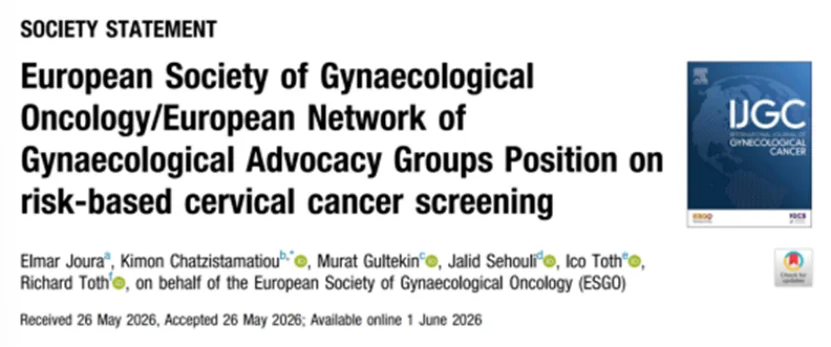
Large European randomized studies have confirmed that HPV primary screening provides 60%–70% greater protection against invasive cervical cancer compared to traditional cytology, but this high sensitivity also brings high false-positive rates. If all positives are directly referred to colposcopy without triage, massive overtreatment results. The statement also notes that persistent infection with HPV16 and other high-risk types carries far higher risk than other types, that screening protocols for vaccinated populations need to be designed separately, and that genotyping alone is insufficient to support precise risk stratification—highlighting the urgent need for more objective downstream triage tools.
The statement specifies that gene methylation can capture stable epigenetic changes occurring early in carcinogenesis, providing more objective assessment than cytology interpretation and being more closely correlated with "whether lesions are truly progressing" than HPV genotyping. It can significantly reduce unnecessary colposcopy referrals and is a key piece completing the "vaccine + primary screening + triage + treatment + follow-up" elimination loop for cervical cancer.
I. CISCER® Has Completed Global Strategic Deployment
Notably, prior to the ESGO position statement, the domestically developed cervical cancer methylation product CISCER® (PAX1/JAM3 dual-gene methylation detection) had already completed its global strategic deployment: it obtained NMPA Class III medical device certification and EU CE marking in 2023, with a technology pathway highly aligned with ESGO's "risk individualization" philosophy. Academically, related research findings have been presented multiple times at top conferences including EUROGIN, ESGO Annual Congress, and the International Union Against Cervical Cancer (IUCC), with nearly 20 high-impact SCI papers published, demonstrating mature evidence-based validation capabilities in Chinese populations.
Clinical data show that for the HR-HPV positive population, CISCER® can reduce unnecessary colposcopy referral rates by 44.5% compared to traditional cytology, with a residual CIN3+ risk of only 0.9% and a negative predictive value of 99.1%. In traditionally difficult-to-screen populations such as postmenopausal women and non-HPV16/18 infected individuals, the AUC reaches 0.934, simultaneously addressing the dual pain points of missed diagnoses and overtreatment, and can seamlessly adapt to the stratified screening needs proposed by ESGO for vaccinated and elderly populations.
Cervical cancer is the malignancy most likely to be eliminated, and risk stratification is the core of the next phase of screening upgrades. ESGO has just written "methylation triage" into guidelines, and the domestic innovative product is already in position—this "Chinese solution" from Beijing not only serves domestic two-cancer screening quality improvement and expansion needs but can also benchmark against international standards, contributing technological strength to the global elimination of cervical cancer.
II. Impact of the Position Statement on Risk-Based Cervical Cancer Screening
Four "Genuine Shifts"
① Methylation testing explicitly named by ESGO as a triage tool.
The position statement explicitly states: methylation testing can significantly reduce the proportion of HPV-positive women directly referred to colposcopy.
This carries significant weight—it amounts to a European declaration in international guidelines: the next bottleneck in cervical cancer screening is not "finding HPV positivity" but "filtering from the massive HPV-positive pool those who truly need treatment." Methylation captures stable molecular events that have already occurred in early carcinogenesis, making it more objective than cytology and closer to "whether real progression is occurring" than HPV genotyping.
② HPV testing replacing cytology is the general direction, but not the endpoint.
Large European randomized studies have confirmed that HPV primary screening provides approximately 60%–70% greater protective effect against invasive cervical cancer than cytology. However, HPV is highly sensitive but less specific than cytology—how to triage after positivity is the real question. Without triage, a new form of overtreatment emerges: "HPV positive → all to colposcopy."
③ HPV genotyping is the core of risk assessment.
HPV16 positivity carries significantly higher long-term risk than other high-risk types; persistent HPV16 positivity carries even higher risk. Grouping "persistent HPV16 positivity" and "one-time other high-risk type" into the same management pathway was never reasonable.
④ Screening protocols for vaccinated populations must be designed separately.
After vaccination, cervical cancer/precancerous lesion risk is reduced, screening intervals can be extended, greater reliance on genotyping is appropriate, and a more conservative approach to non-vaccine-type lesions is warranted—this is also the first testing ground for the implementation of "risk stratification."
Reference:
Joura E, Chatzistamatiou K, Gultekin M, et al. European Society of Gynaecological Oncology/European Network of Gynaecological Advocacy Groups Position on risk-based cervical cancer screening. Int J Gynecol Cancer. doi:10.1016/j.ijgc.2026.104794

Beijing Origin-Poly Co., Ltd. is a technology enterprise driven by innovation and committed to health. As a pioneer in the field of early diagnosis of gynecologic tumors, CISPOLY has developed early detection products for cervical cancer, endometrial cancer, ovarian cancer and other gynecologic malignancies based on proprietary technologies and patent-protected biomarkers, filling gaps in this field.
As women's awareness of their own health continues to grow, the women's health market holds tremendous potential. Beyond the gynecologic tumor early screening and diagnosis product line, CISPOLY will continue to establish additional women's health-related product pipelines, striving to become a technology innovation leader in the women's health market.