CISENDO® Clinical Guide (I) | Early Screening Helps Modern Women Avoid Endometrial Cancer
The CISENDO® (CDO1/CELF4) gene methylation detection kit received NMPA Class III medical device registration (Registration No.: 20243402610) in December 2024. Through the same non-invasive sampling method as HPV testing, CISENDO® achieves highly precise detection with 94.51% sensitivity and 94.16% specificity, not only providing comprehensive early warning of carcinogenesis but also effectively compensating for blind spots in traditional imaging examinations. As the world's first non-invasive endometrial cancer early diagnostic test based on cervical exfoliated cell samples, its launch benefits many women and marks the entry of endometrial cancer early screening technology into a new stage of non-invasive, convenient, and precise detection.
With changing dietary habits in modern times, the incidence of endometrial cancer is quietly rising. In highly developed cities such as Beijing and Shanghai, it has surpassed cervical cancer to become the most prevalent gynecologic malignancy, with a trend toward younger age of onset [1]. This makes it a new focus of gynecologic cancer prevention and control in China.
The prognosis of endometrial cancer is closely related to the timing of detection. Data show that the five-year survival rate for Stage I patients can reach 92%, while once it progresses to Stage IV, survival rate drops sharply to 15%. This dramatic difference in survival rates underscores the extreme importance and urgency of early diagnosis and treatment.
Insidious Symptoms, Screening Faces Real-World Challenges
Early symptoms of endometrial cancer are atypical, often presenting as irregular vaginal bleeding or postmenopausal bleeding, which are easily overlooked or confused with other gynecologic diseases, leading to delayed consultation. More importantly, China faces the challenge of "lack of accurate, non-invasive tools" for early endometrial cancer screening:
-
· Limitations of traditional ultrasound: Commonly used transvaginal ultrasound (TVU) relies on measuring endometrial thickness, but has insufficient sensitivity for early lesions and a high false-positive rate, potentially leading to unnecessary anxiety or missed diagnosis risk.
-
· Failure of serum markers: Traditional tumor markers such as CA125 have suboptimal sensitivity and specificity for early endometrial cancer, with limited reference value.
High threshold for invasive examinations: Definitive diagnostic methods such as hysteroscopy and diagnostic curettage are invasive procedures that may cause pain, endometrial damage, and infection risk, causing many women to hesitate and resulting in low compliance.
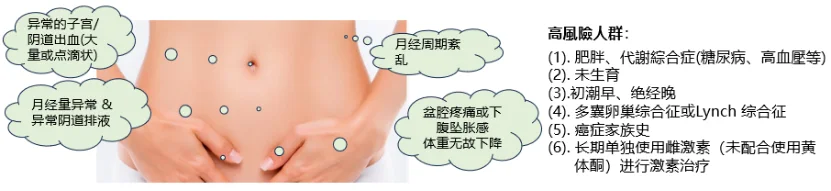
Figure 1: Women with early endometrial cancer symptoms and high-risk populations should undergo screening as early as possible
Clinical data for CISENDO® show detection sensitivity for endometrial cancer as high as 94.51% and specificity of 94.16%. Recommended by expert consensus, it can precisely identify carcinogenesis risk. It is applicable for broad health management and risk screening, with particular recommendation for the following populations to consult for evaluation:
1. Those with abnormal symptoms: Especially women with abnormal uterine bleeding (such as postmenopausal bleeding, menstrual irregularities, menorrhagia, or prolonged menstruation).
2. Those with metabolic diseases: Such as obesity, diabetes, hypertension, etc. — high-risk populations for endometrial cancer.
3. Those with specific medical or family history: Including polycystic ovary syndrome (PCOS) patients, women with a family history of endometrial cancer or colorectal cancer, and those on long-term unopposed estrogen therapy.
4. Those needing auxiliary diagnosis: Cases where transvaginal ultrasound or other imaging shows abnormally thickened endometrium or space-occupying lesions, or where tumor markers such as CA125 are abnormal, requiring auxiliary benign-malignant differentiation.
5. Health-conscious and proactive managers: Healthy or high-risk women who wish to undergo early risk screening using high-sensitivity, non-invasive technology.
Summary
Faced with the reality of rising endometrial cancer incidence, atypical early symptoms, and multiple limitations of traditional screening methods, the broad female population — especially high-risk groups — urgently needs a more precise, convenient, and acceptable new early screening solution. This is precisely the background and significance of the new generation non-invasive detection technology — CISENDO®.
Women who meet the above high-risk characteristics or are concerned about their reproductive health are advised to proactively discuss with their physician the applicability of CISENDO® testing. Early detection is key to overcoming cancer, and proactive screening is an important step in safeguarding health.
References
[1] Lu KH, Broaddus RR. Endometrial Cancer. N Engl J Med. 2020 Nov 19;383(21):2053-2064.
[2] Precision Medicine Committee of Obstetrics and Gynecology, China Maternal and Child Health Research Association; Gynecologic Oncology Branch, Shanghai Medical Association. Chinese Expert Consensus on Three-Level Prevention Strategies for Endometrial Cancer (2025 Edition). Chinese Journal of Practical Obstetrics and Gynecology, 2025, 41(10): 1004-1011.

Beijing Origin CISPOLY Biotechnology Co., Ltd. is a technology enterprise driven by innovative science and focused on health. CISPOLY is a pioneer in the field of early diagnosis of gynecologic tumors. With proprietary technology and patent-protected biomarkers at its core, the company has developed early diagnostic products for cervical cancer, endometrial cancer, ovarian cancer, and other gynecologic tumors, filling a void in this field.
As women pay increasing attention to their own health, the women's health market holds great promise. Beyond its gynecologic tumor early screening and diagnosis product line, CISPOLY will continue to build additional women's health-related product pipelines, striving to become a technology-innovation-driven leader in the women's health market.