CISCER® Clinical Guide (III) | Building Consensus: Clinicians and Patients Together Toward Precision Cervical Health Management
Cervical cancer prevention and treatment is a shared journey that requires both professional medical judgment and active patient participation. The introduction of the CISCER® (PAX1/JAM3) gene methylation test provides a more precise "navigator" for this path. To fully realize its value, consensus between physicians and patients must be established at key junctures to form a collaborative force.
Consensus 1: On the Value of Testing — From "Detecting the Virus" to "Foreseeing the Risk"
-
·Physician's perspective: This is a powerful molecular pathology tool. It goes beyond HPV testing (which only indicates "presence or absence of infection") by directly probing whether cells have initiated the molecular program toward precancerous lesions (HSIL), achieving a leap from "infection screening" to "disease risk screening." Its core value lies in precise triage, effectively distinguishing between "carrier status requiring no excessive intervention" and "progression risk that demands close monitoring or intervention."
-
·Patient's perspective: This is a clearer, personalized "risk report." When an HPV-positive or inconclusive TCT result causes anxiety, it can tell me whether my cervical cells are currently "essentially safe" or "require further examination," helping me understand why follow-up or colposcopy is needed, making my decisions more evidence-based, and reducing unnecessary panic and overtreatment.
-
·Shared goal: We agree that the core value of this test is to provide earlier, more objective risk stratification for "high-grade" lesions, focusing limited medical resources and attention on truly high-risk populations while reassuring those at low risk.
Consensus 2: On Timing of Testing — Precise Application at Key Decision Points
Both parties should jointly understand that at the following critical clinical decision "crossroads," this test can provide key information:
1.During HPV-positive triage: Especially for non-16/18 type positivity, consensus supports testing to determine whether immediate colposcopy is needed or whether safe follow-up is appropriate.
2.When TCT results are inconclusive: When cytology reports show ASC-US or LSIL, consensus supports using it as an important adjunctive decision-making tool to clarify the risk level.
3.When screening special populations: For postmenopausal women, immunosuppressed individuals, and others for whom conventional screening may be limited, consensus supports using it as an important supplement.
4.During post-treatment follow-up monitoring: For patients who have completed treatment for high-grade cervical lesions, consensus supports using it as a more specific follow-up tool than HPV to provide earlier warning of recurrence risk.
Consensus 3: On Result Interpretation and Action — Outcome-Oriented, Clear Path Forward
This is the most critical aspect of physician-patient communication. Clear consensus can eliminate misunderstandings and facilitate optimal decision-making.
| Test Result | Clinical Significance Consensus | Follow-up Action Consensus |
|---|---|---|
| Methylation negative | Current risk is low: Indicates that no definitive high-grade lesion signals have been detected at the molecular level in cervical cells. Even if HPV is positive, it suggests that the risk of near-term progression to high-grade lesions is very low. | Reassurance with regular follow-up: Patients can significantly alleviate anxiety. Physician and patient agree on follow-up at routine screening intervals (e.g., 1 year), typically without immediate colposcopy. This avoids overtreatment. |
| Methylation positive | A signal requiring definitive diagnosis: Indicates that stable molecular changes associated with high-grade precancerous lesions have appeared in cells. A "warning" has been detected that warrants — and justifies — pathological confirmation, requiring further examination. | Proceed actively with colposcopy: This is a necessary and proactive step. Physician and patient agree to arrange colposcopy (± biopsy) as soon as possible to clarify the specific degree of lesion. This is precisely the optimal intervention window to block cancer development; the vast majority of problems can be cured at this stage through intervention (e.g., minimally invasive treatment or minor outpatient procedures). |
Consensus 4: On Communication and Decision-Making — Evidence-Based Shared Decision-Making
-
·Physician's responsibility: Based on evidence-based medicine, clearly explain the test's principles, value, limitations, and the clinical pathways corresponding to different results, providing professional recommendations.
-
·Patient's role: Actively understand your own situation, be aware of the pros and cons of different options, and communicate fully with your physician, incorporating your own values and preferences.
-
·Shared decision-making: Before and after testing, both parties — based on this objective molecular evidence (methylation test result), combined with HPV, TCT results, and personal circumstances — jointly discuss and decide on the most appropriate individualized management plan — whether reassured follow-up or active intervention.
Summary
The CISCER® methylation test builds a communication bridge between physicians and patients based on molecular pathology risk evidence for high-grade cervical lesions. By establishing the above consensus, we can translate advanced technology into efficient clinical practice and reassuring personal health management. It ultimately points toward a shared goal:
On the path of cervical cancer prevention and treatment, use more precise judgment to reduce unnecessary worry and treatment; use earlier detection to firmly seize the curable window that is entirely within our control.

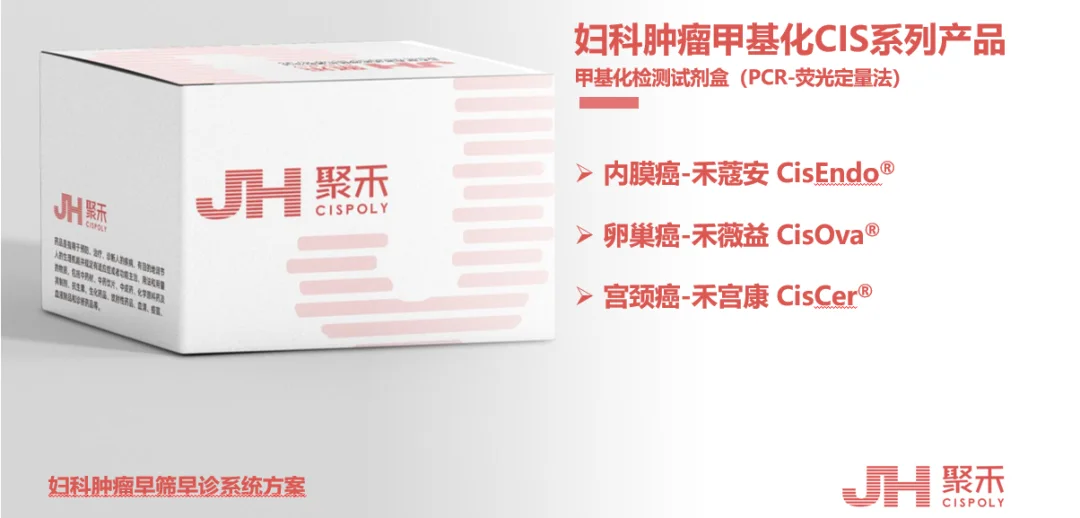
Beijing Origin CISPOLY Biotechnology Co., Ltd. is a technology enterprise driven by innovative science and focused on health. CISPOLY is a pioneer in the field of early diagnosis of gynecologic tumors. With proprietary technology and patent-protected biomarkers at its core, the company has developed early diagnostic products for cervical cancer, endometrial cancer, ovarian cancer, and other gynecologic tumors, filling a void in this field.
As women pay increasing attention to their own health, the women's health market holds great promise. Beyond its gynecologic tumor early screening and diagnosis product line, CISPOLY will continue to build additional women's health-related product pipelines, striving to become a technology-innovation-driven leader in the women's health market.