Cervical Cancer Methylation Academic Exchange — Case Discussion on Clinical Application of Methylation Testing: Exploring Missed Diagnosis in Occult Cervical Adenocarcinoma
On August 25, 2025, a cervical cancer methylation academic exchange conference was held online, co-chaired by Director Zhao Qingping from Sichuan Provincial Maternity and Child Health Hospital and Director Dong Yuyan from Shandong Provincial Maternity and Child Health Hospital. The meeting focused on discussing clinical case sharing of methylation detection in cervical cancer screening, triage, and treatment decisions, exploring its clinical application feasibility. This exchange activity will provide frontier exploration for future clinical research and the development of relevant guidelines and expert consensus.
##1. Case Sharing
Director Wei Yanan from Tengzhou Central People's Hospital shared a case of 4-year persistent HPV18 infection where methylation detection positivity led to further diagnosis of cervical adenocarcinoma, emphasizing the value of methylation in adenocarcinoma screening.
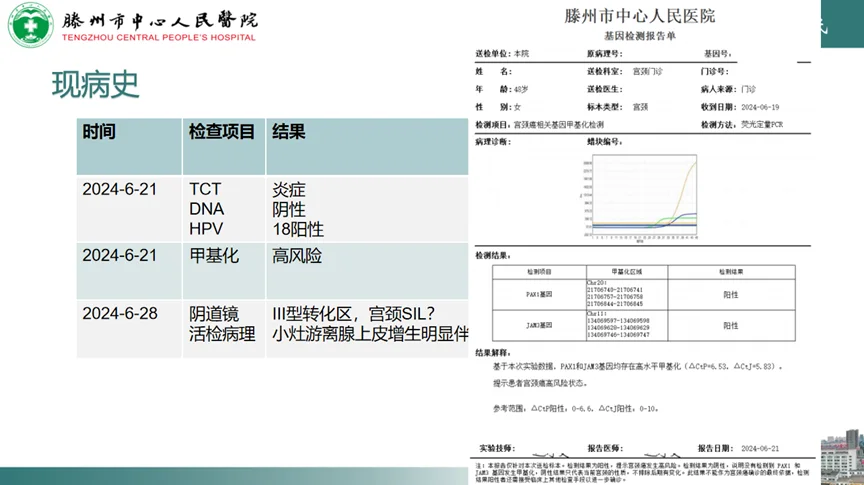
- Basic Information: Name: Man XX, Female, 48 years old. Chief complaint: Persistent HPV18 infection for 4 years. Menstrual history: Regular cycles (5/30), moderate flow, no dysmenorrhea.
- Past medical history: Hypertension; Family history: No special genetic disease history.
- Previous history:
- 2020-10-11: TCT suggested inflammation, HPV18 positive; colposcopy biopsy/endocervical curettage suggested chronic inflammation, biopsy tissue p16 negative, Ki-67 basal cells positive → 1-year follow-up recommended (patient did not attend follow-up on schedule).
- 2023-06: Follow-up still HPV18 positive, TCT suggested inflammation; colposcopy biopsy suggested cervical canal chronic inflammation, small amount of free squamous epithelial hyperplasia, immunohistochemistry Ki-67 (parabasal cells +), p16 patchy positivity → medical treatment and follow-up recommended.
- 2024-06: HPV18 persistently positive, TCT still suggested inflammation, routine examination found no definitive intraepithelial neoplasia, but immunohistochemistry suggested p16 positivity in glandular areas.
- Current medical history
- 2024-06-21: PAX1/JAM3 dual-gene DNA methylation testing performed (suggesting high risk, positive); subsequent colposcopy review showed Type III transformation zone, locally visible small foci of glandular epithelial abnormalities with p16 positivity, multi-point biopsy still mostly suggested chronic inflammation or focal hyperplasia, pathology did not definitively show large areas of CIN2+/HSIL.
- Pathology and imaging, HPV and cytology results were inconsistent, suspected occult lesion; methylation detection results suggested high risk, prompting the clinical team to take further diagnostic intervention. Treatment course
- 2024-07-05: Diagnostic cervical conization performed under general anesthesia; intraoperatively, approximately 0.2cm focal non-staining area visible on the cervical surface. Post-operative pathology: cervical adenocarcinoma found (in situ/small-range adenocarcinoma).
- Post-operative MRI evaluation performed, followed by laparoscopic total hysterectomy + bilateral salpingo-oophorectomy on 2024-07-15 (patient no longer had fertility needs).
- Post-operative pathology: Post-conization changes, small area of CINI and focal glandular epithelial hyperplasia in cervix, uterine fibroids, endometrial hyperplasia, bilateral adnexa unremarkable. Follow-up continues per clinical pathway.
##2. Analysis of Reasons for Missed Diagnosis
Director Wei's analysis of missed diagnosis reasons
- Insufficient HPV detection indication: Neither HPV DNA nor E6/E7 mRNA can fully indicate the presence of occult epithelial lesions or their progression speed; persistent positivity suggests risk but cannot localize lesions.
- TCT/pathology sampling and manual interpretation limitations: Insufficient sampling, slide preparation, or subjective interpretation can lead to false negatives or missed diagnoses, especially for glandular lesions easily overlooked.
- Limitations of DNA ploidy testing: Negativity does not exclude early lesions (early lesions may not yet have obvious ploidy abnormalities); positivity requires further pathological confirmation.
- Colposcopy false negatives and sampling blind spots: Colposcopy false-negative rates are high (wide literature range), especially for TZ3 (Type III transformation zone) or cervical canal/fornix lesions easily missed. Accuracy of biopsy sampling and pathological interpretation differences: Biopsy site/depth, occult lesion location, and pathological interpretation all affect final diagnosis.
##3. Why DNA Methylation Detection Was Used in This Case for Precise Assessment
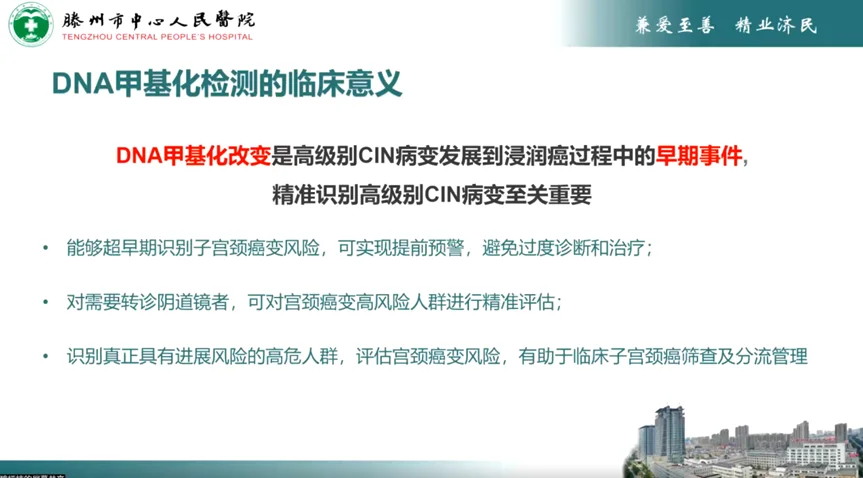
Early molecular changes precede morphological changes: Abnormal methylation in promoter regions of cancer-related genes (tumor suppressor genes) is an early molecular event in tumorigenesis, often occurring before morphologically visible lesions; methylation detection can capture high-risk lesions "not yet clearly identified by traditional microscopy/pathology."
Filling sampling/imaging blind spots: When colposcopy sampling is limited (such as TZ3, endocervical or fornix lesions) or biopsies repeatedly show only inflammation, methylation detection can capture molecular signals through cervical secretions/exfoliated cells, indicating occult lesion risk.
Improving triage and decision precision: Methylation positivity suggests high risk, prompting clinical adoption of more aggressive diagnostic measures (such as diagnostic conization or enhanced imaging/follow-up), while methylation negativity has a high negative predictive value, reducing unnecessary invasive examinations and overtreatment.
Particularly sensitive for glandular lesions: Adenocarcinoma and glandular epithelial abnormalities are often missed in cytology and colposcopy; some studies have shown that methylation markers have potential advantages in identifying glandular lesions (alerting to the need for deeper/more targeted sampling or conization).
Dynamic monitoring value: Changes in methylation levels can be used for follow-up, indicating lesion progression or recurrence risk, aiding long-term management and prognosis assessment.
##4. Clinical Significance of DNA Methylation Detection
As a molecular supplementary tool, in patients with HPV positivity but inconsistent morphological/pathological findings, difficult sampling, or negative colposcopy but clinical suspicion of occult lesions, methylation detection can improve early detection rates; it has warning value for glandular lesions (such as the adenocarcinoma in this case), reducing missed diagnoses of adenocarcinoma caused by limitations of morphological examination; it can be used to optimize triage strategies, reduce unnecessary referrals or overtreatment, while providing stronger diagnostic evidence for patients with combined high-risk factors; in follow-up management, methylation negativity can enhance follow-up confidence, while methylation positivity suggests shortening review intervals or proceeding directly to confirmatory procedures.
##5. Recommended Clinical Scenarios for DNA Methylation Detection
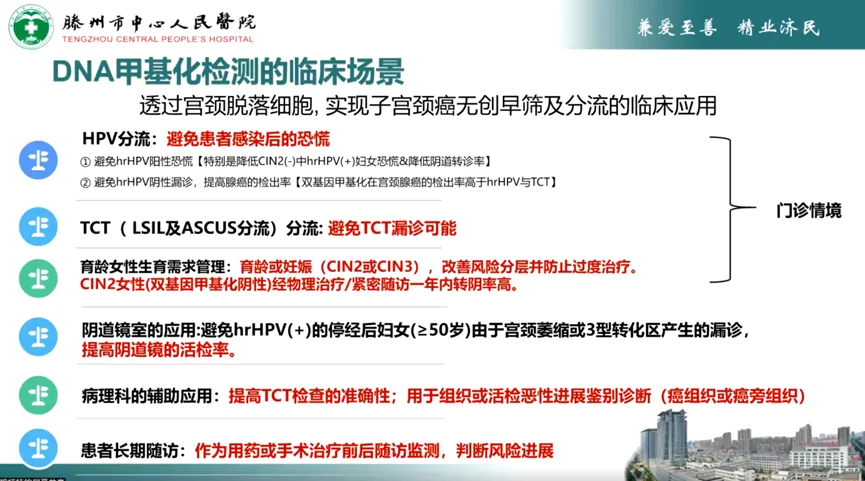
- HPV positive but TCT/biopsy results repeatedly show inflammation or are uncertain, and clinical/colposcopy suggests risk or unsatisfactory sampling;
- Menopausal or cervical atrophy, TZ3 type transformation zone patients, scenarios where colposcopy/biopsy easily misses diagnoses;
- Suspected glandular lesions (cervical canal/fornix area lesions), patients with low recognition rates of glandular epithelial changes by cytology;
- Persistent HPV infection where the patient is unwilling or unsuitable for immediate diagnostic conization, as a short-term follow-up risk stratification tool;
- Post-operative follow-up/recurrence monitoring to assess molecular risk changes.
##6. Case Discussion
Director Zhao Qingping from Sichuan Provincial Maternity and Child Health Hospital and Director Chen Xin from Mianyang People's Hospital respectively expressed their views on the application of DNA methylation in cervical cancer screening.
- Director Meng Xia (Chengdu Medical College Second Affiliated Hospital, Nuclear Industry 416 Hospital) discussed and summarized
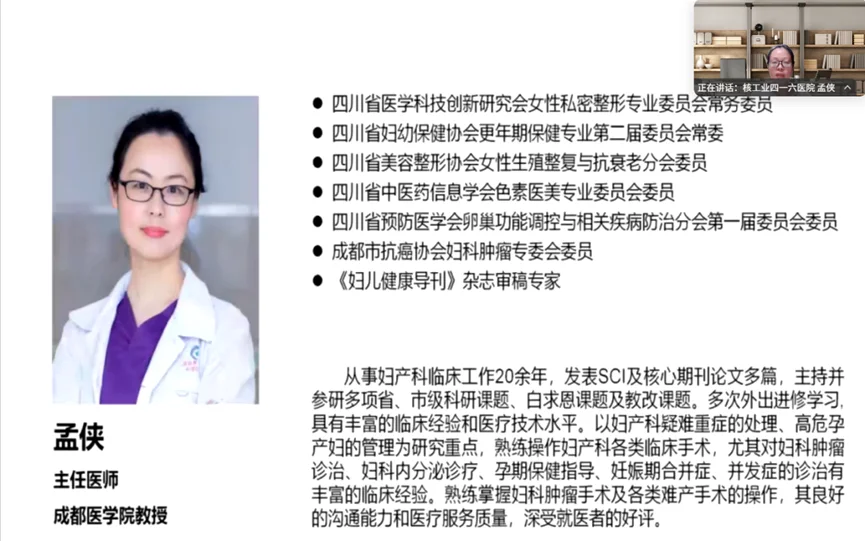
- Academic consensus and positioning: Recognized that "dual-gene methylation (such as PAX1+JAM3)" has been recommended as a cervical cancer screening and triage tool by expert consensus and multiple guidelines; methylation changes participate in cervical cancer development and progression, with early screening and risk stratification value.
- From "detection" to "prediction": Beyond screening, methylation has potential value for lesion progression/outcome prediction, treatment efficacy assessment, and prognosis (performance differences between gene combinations require further study and validation).
- Triage and reducing invasiveness: For patients with persistent HPV positivity but mild cytological abnormalities (such as ASC-US) or negative TCT with high-risk factors, methylation can precisely triage, reducing unnecessary colposcopy and biopsy, especially applicable for postmenopausal, TZ3, difficult sampling, or poorly compliant cases.
- Patient-centered: Facing anxiety and refusal of "annual colposcopy referrals," methylation "low-risk" results can serve as a basis for follow-up rather than immediate invasive procedures, providing more "acceptable" management pathways.
- Special population scenarios: For pregnant women with concurrent HPV/cytology abnormalities, methylation is expected to become auxiliary evidence for deferring colposcopy and dynamic observation (more clinical evidence needed).
- Accessibility improvement: As testing costs decrease, methylation becomes more easily incorporated into routine triage and fine-grained management, with continued multicenter experience and data accumulation recommended.
- Director Zhao Qingping (Sichuan Provincial Maternity and Child Health Hospital) discussed and summarized
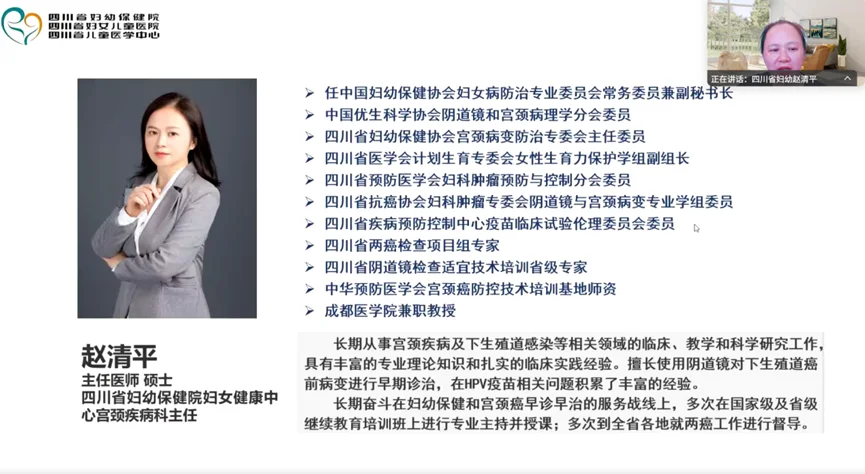
- Clinical pain points and population needs: Menopausal, pregnant, and young patients have strong fear and trauma perception of colposcopy/biopsy, and many "referrals" ultimately show no lesions, suggesting the need to strictly control referral rates and optimize triage pathways.
- Rationality of early intervention: Supports introducing methylation as a precision triage tool early in screening, especially for high-risk populations with insufficient morphological evidence, expected to reduce the contradiction between over-referral and missed diagnoses.
- Evidence-based and standardization: Currently supported by expert consensus, but guidelines are still being advanced; clinical practice should be individualized within the framework of guidelines and consensus, combined with specific patient circumstances.
- Chinese population evidence: Calls for accumulation of local data (including age-related correlation and stratified thresholds) to promote incorporation of methylation detection into guidelines and standardized pathways.
Comprehensive Conclusion: Both directors unanimously agreed that dual-gene methylation detection such as PAX1+JAM3 should serve as a key supplement to existing screening systems: in scenarios of persistent HPV positivity, mild or inconsistent TCT results, TZ3/difficult sampling, and special populations (menopausal/pregnant), providing more precise triage and follow-up evidence, reducing unnecessary invasive procedures while lowering missed diagnosis risk. Future needs include consolidating evidence with real-world data from Chinese populations to promote standardized application and guideline integration.
##7. Conclusion
This academic exchange conference, through typical cases and expert discussion, prominently demonstrated the practical value of PAX1 combined with JAM3 dual-gene methylation detection in cervical cancer screening and clinical management. This case demonstrated: in the context of repeatedly negative routine screening or only inflammation, but persistent HPV positivity and clinical suspicion of occult lesions, DNA methylation dual-gene detection (PAX1+JAM3) provided key clues for the discovery of occult high-grade lesions or adenocarcinoma, prompting the clinical team to take timely diagnostic conization and ultimately confirm diagnosis and management. This case emphasized the necessity of incorporating molecular testing as a complement to traditional screening in clinical pathways to reduce missed diagnoses and achieve earlier diagnosis and individualized management.

Beijing Origin CISPOLY Biotechnology Co., Ltd. is a technology enterprise driven by innovative science and focused on health. CISPOLY is a pioneer in the field of early diagnosis of gynecologic tumors. With proprietary technology and patent-protected biomarkers at its core, the company has developed early diagnostic products for cervical cancer, endometrial cancer, ovarian cancer, and other gynecologic tumors, filling a void in this field.
As women pay increasing attention to their own health, the women's health market holds great promise. Beyond its gynecologic tumor early screening and diagnosis product line, CISPOLY will continue to build additional women's health-related product pipelines, striving to become a technology-innovation-driven leader in the women's health market.