Case Study | Pelvic Mass in a Premenopausal Woman: Observe or Operate Early? CDO1/HOXA9 Methylation Testing Enables Non-Invasive Precision Early Warning

I. Background
Ovarian cancer has an insidious onset and is difficult to diagnose early, earning it the nickname "silent killer" among gynecologic tumors.
Currently, biomarkers such as CA125 are commonly used for clinical risk assessment. However, in young, premenopausal women, these traditional indicators are susceptible to interference from menstrual cycles, inflammation, and benign diseases, with significantly reduced sensitivity and specificity—particularly in identifying early-stage lesions.
II. Case Presentation
- Patient Basic Information
- Age: 20 years
- Reproductive history: G0P0 (0-0-1-0)
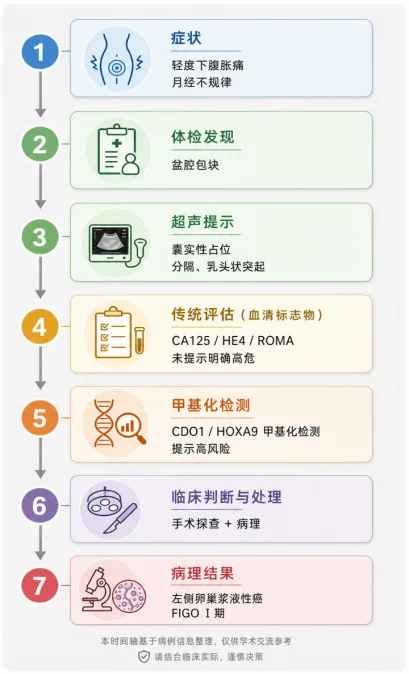
- Present illness: Unmarried, premenopausal. Intermittent mild lower abdominal distension pain and bearing-down discomfort for approximately 1 month, worsening with activity or during menstruation, accompanied by irregular menstruation and increased menstrual flow. Symptoms were mild and initially not taken seriously. Pelvic mass was discovered during physical examination, prompting clinical consultation.
2. Gynecological Examination and Assessment Results
-
Ultrasound revealed a cystic-solid occupancy in the left ovary with heterogeneous internal echoes, visible septations and focal papillary projections, and detectable blood flow signals. Given the patient's young, premenopausal status, benign ovarian cyst was the initial clinical impression, and further tumor markers and molecular testing were conducted for risk assessment.
-
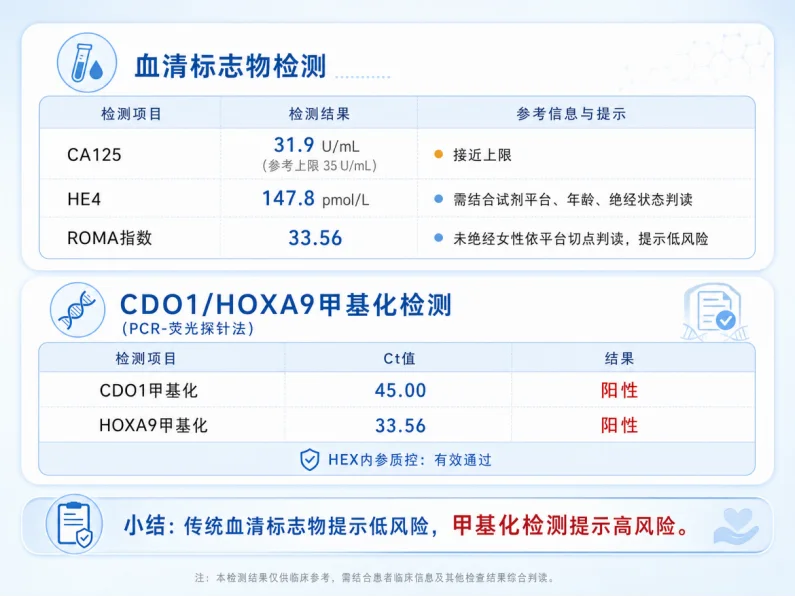
Serum markers including CA125 and HE4 were negative; ROMA score indicated low risk.
-
Serum CDO1 and HOXA9 methylation detection comprehensive score indicated high risk.
3. Comprehensive Clinical Assessment
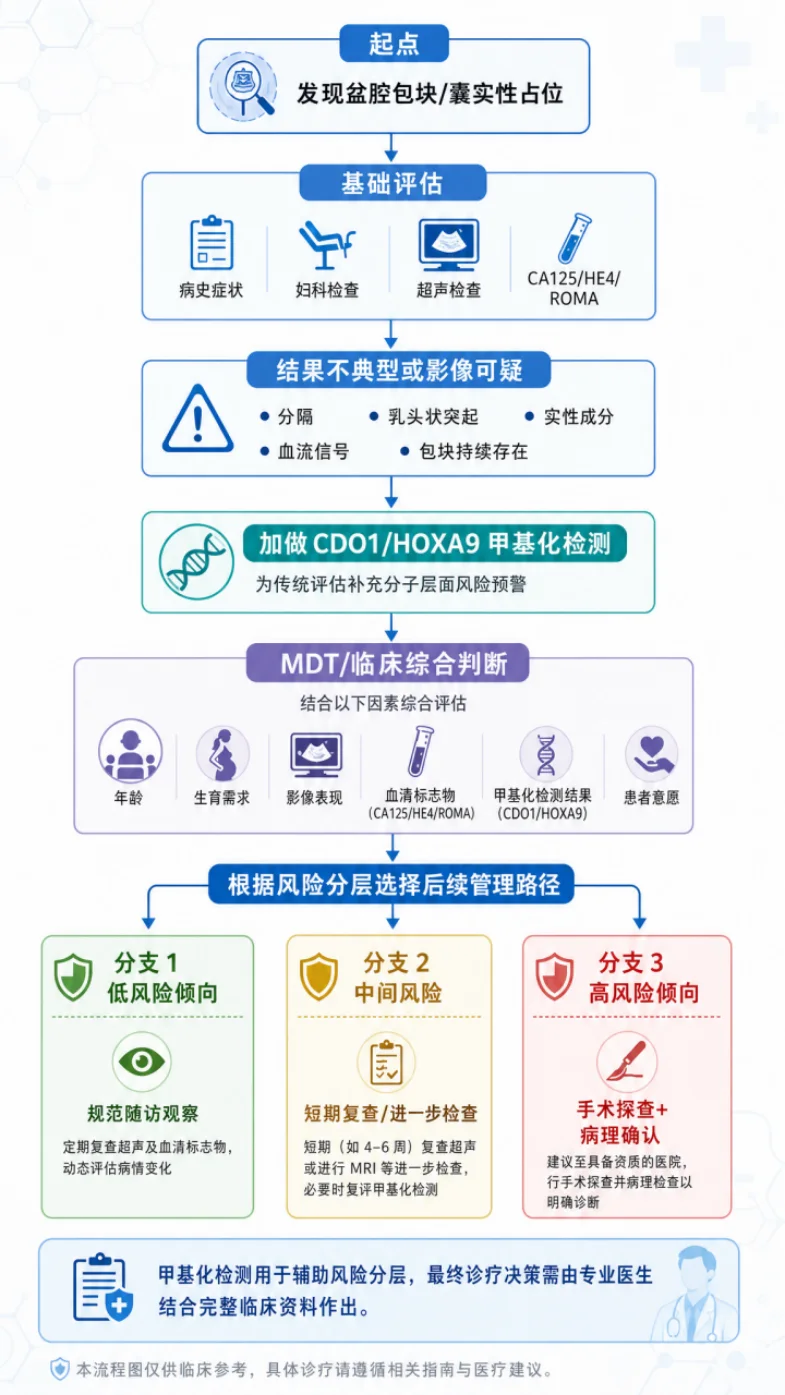
Considering the patient's young age, premenopausal status, persistent pelvic mass, suspicious ultrasound findings, and high-risk methylation test result, multidisciplinary assessment recommended surgical exploration + pathological examination to avoid delaying treatment of a potential malignancy.
4. Pathological Diagnosis
✅ Left ovarian serous carcinoma (FIGO Stage I)
III. Special Challenges in Ovarian Cancer Screening and Assessment for Premenopausal Women
Ovarian cancer is more easily overlooked due to its lack of typical early symptoms, particularly in premenopausal women. Functional cysts, endometriosis, and other benign lesions common in premenopausal women make differentiation between benign and malignant pelvic masses more difficult. Traditional serum markers and ultrasound are also susceptible to interference from menstruation, inflammation, and complex lesions, making early-stage malignancy difficult to definitively diagnose.
Furthermore, many young women have psychological reservations about gynecologic surgery, including concerns about fertility, hormonal changes, and quality of life impacts, leading them to prefer prolonged observation that may delay treatment. Due to the insidious progression and rapid spread of ovarian cancer, most patients are diagnosed at intermediate to advanced stages.
IV. Case Summary and Clinical Implications
This case reports a 20-year-old premenopausal woman in whom, despite traditional serum markers indicating low risk, the CDO1/HOXA9 gene methylation test was positive, leading through comprehensive clinical assessment to pathological identification of early-stage ovarian cancer (FIGO Stage I).
Serum CDO1/HOXA9 methylation detection can serve as an important molecular supplementary tool to traditional screening, helping to identify occult high-risk patients easily overlooked in routine assessment, reducing the risk of missed diagnoses, and optimizing screening and management strategies for high-risk ovarian cancer populations.
Disclaimer: This case report is intended solely for academic exchange and medical education, and does not constitute medical advice or diagnostic basis for any specific patient. Clinical diagnosis and treatment should follow the guidance of qualified medical professionals.

Beijing Origin-Poly Co., Ltd. is a technology enterprise driven by innovation and committed to health. As a pioneer in the field of early diagnosis of gynecologic tumors, CISPOLY has developed early detection products for cervical cancer, endometrial cancer, ovarian cancer and other gynecologic malignancies based on proprietary technologies and patent-protected biomarkers, filling gaps in this field.
As women's awareness of their own health continues to grow, the women's health market holds tremendous potential. Beyond the gynecologic tumor early screening and diagnosis product line, CISPOLY will continue to establish additional women's health-related product pipelines, striving to become a technology innovation leader in the women's health market.