10th Xiangya Forum Highlights | PAX1/JAM3 CISCER Cervical Cancer Methylation Testing for Treatment Follow-Up: Multi-Center Clinical Study Results Outperform Current Clinical Detection Methods
On April 27, 2025, at noon, Professor Xu Dabao from the Third Xiangya Hospital of Central South University presented a specialized academic lecture titled "Research and Application of Methylation Testing Technology in Gynecologic Tumor Diagnosis and Treatment." He shared the multicenter results analysis of PAX1/JAM3 CISCER® cervical cancer methylation testing for post-treatment follow-up, which generated extensive discussion and attention.
I. Methylation Testing Technology: A New Breakthrough in Cervical Cancer Diagnosis and Treatment
The methylation testing protocol based on detecting PAX1 and JAM3 dual-gene methylation in cervical exfoliated cells provides new ideas and practical pathways for early screening of gynecologic tumors in China. Research has found that detecting CDO1/HOXA9 gene methylation in blood for ovarian cancer, PAX1/JAM3 gene methylation in cervical exfoliated cells for cervical cancer, and CDO1/CELF4 gene methylation in cervical exfoliated cells for endometrial cancer all have mature theoretical foundations and clinical big data validation demonstrating unique non-invasive detection and high-precision advantages, providing new methods for early diagnosis of gynecologic tumors.
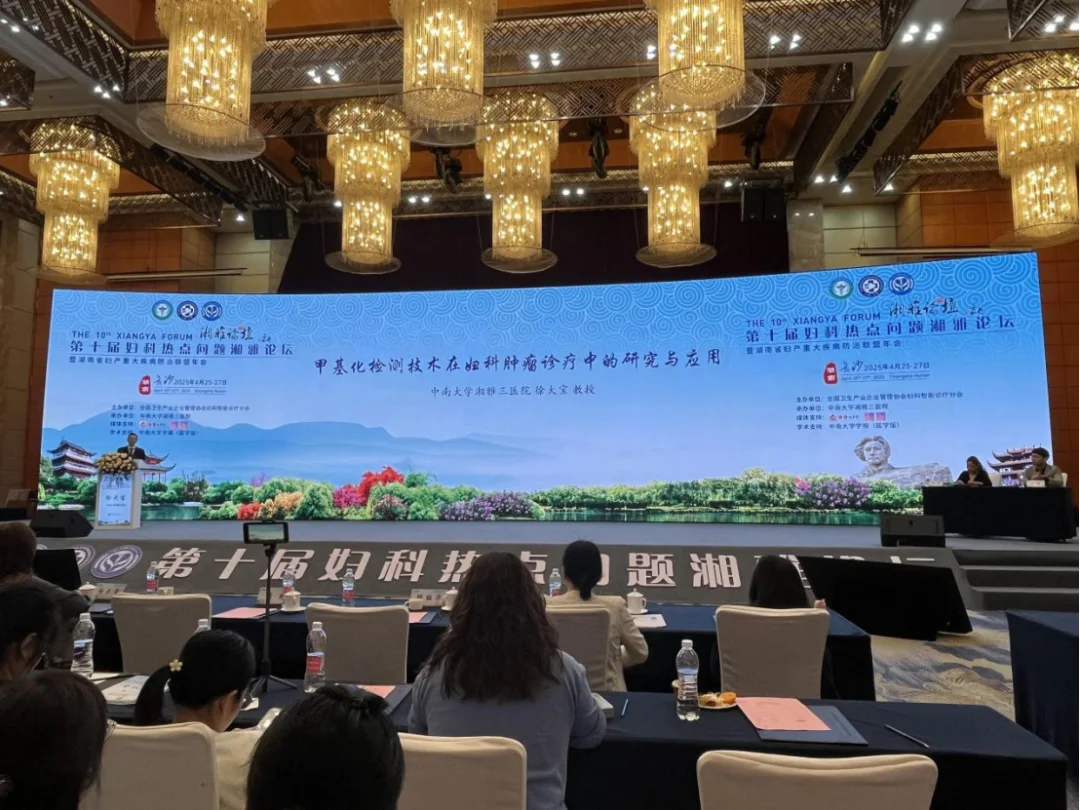
II. Multicenter Clinical Study: Validating the Clinical Value of Methylation Testing
The cervical cancer post-treatment follow-up multicenter study, led by the Third Xiangya Hospital of Central South University, investigated the consistency between PAX1 and JAM3 gene methylation testing and conization baseline pathology in cervical intraepithelial neoplasia (CIN), as well as post-treatment recurrence prediction. The study enrolled several hundred women undergoing conization and hysterectomy for cervical lesions and cervical cancer. By collecting cervical exfoliated cell samples before treatment for PAX1/JAM3 methylation testing, results showed that CISCER® methylation baseline positive results, compared with biopsy pathology, demonstrated important clinical value in predicting postoperative pathology upgrade or downgrade and post-treatment recurrence.

III. Case Sharing: Methylation Testing Aids Precision Diagnosis and Treatment
In case sharing, a postmenopausal female patient presented with lumbar distension. Biopsy pathology showed CIN I, but methylation testing was positive, and final conization pathology was upgraded to CIN III. This case demonstrates that methylation testing helps reduce the risk of missing occult lesions caused by declining hormone levels.
Another patient had biopsy pathology of CIN II-III with preoperative methylation testing negative, and postoperative pathology was downgraded to CIN1, suggesting that methylation testing provides some indication for postoperative pathology downgrade, helping reduce overtreatment.
IV. Clinical Application Recommendations for Methylation Testing
Based on domestic and international research and expert recommendations, the following clinical pathways for cervical cancer DNA methylation screening are recommended:
-
Stratified management of HPV-positive high-risk women or those with abnormal cytology;
-
Risk assessment for cervical Type III transformation zone and potential adenocarcinoma patients;
-
Post-treatment monitoring of lesions (cancer);
-
Assessment for exiting cervical cancer screening programs;

This conference assembled numerous distinguished experts, including Academician Lang Jinghe from Peking Union Medical College Hospital, Professor Di Wen, President of the Chinese Medical Doctor Association Obstetrics and Gynecology Physician Branch, Professor Zhu Lan, Incoming Chair of the Chinese Medical Association Obstetrics and Gynecology Branch, Professor Chen Xiang, Dean of Xiangya Medical School of Central South University, and Professor Jiang Hong, President of the Third Xiangya Hospital of Central South University, who attended the opening ceremony and delivered speeches.
The forum invited numerous renowned domestic and international experts in gynecology to discuss hot topics and challenging issues in gynecology, focusing on female fertility preservation through keynote speeches, surgical video demonstrations, and discussions of difficult and rare diseases. The forum emphasized sharing the latest theories, technologies, and products from the perspective of female fertility preservation. The content was rich and diverse, presenting a high-level academic feast. The conference also featured a special session on difficult and rare diseases, with case sharing and presentations from multiple provincial-level and municipal hospitals, providing a stage for young obstetrics and gynecology physicians in the province to showcase themselves.

Beijing Origin CISPOLY Biotechnology Co., Ltd. is a technology-driven enterprise committed to health innovation. As a pioneer in the field of early gynecologic oncology diagnosis, CISPOLY has developed early-detection products for cervical cancer, endometrial cancer, and ovarian cancer using proprietary technologies and patent-protected biomarkers, filling a critical gap in the field.
As women pay increasing attention to their own health, the women's health market holds great potential. Beyond the early screening and diagnosis product pipeline for gynecologic oncology, CISPOLY will continue to build additional women's health product lines, establishing itself as a technology-innovation-leading enterprise in the women's health market.